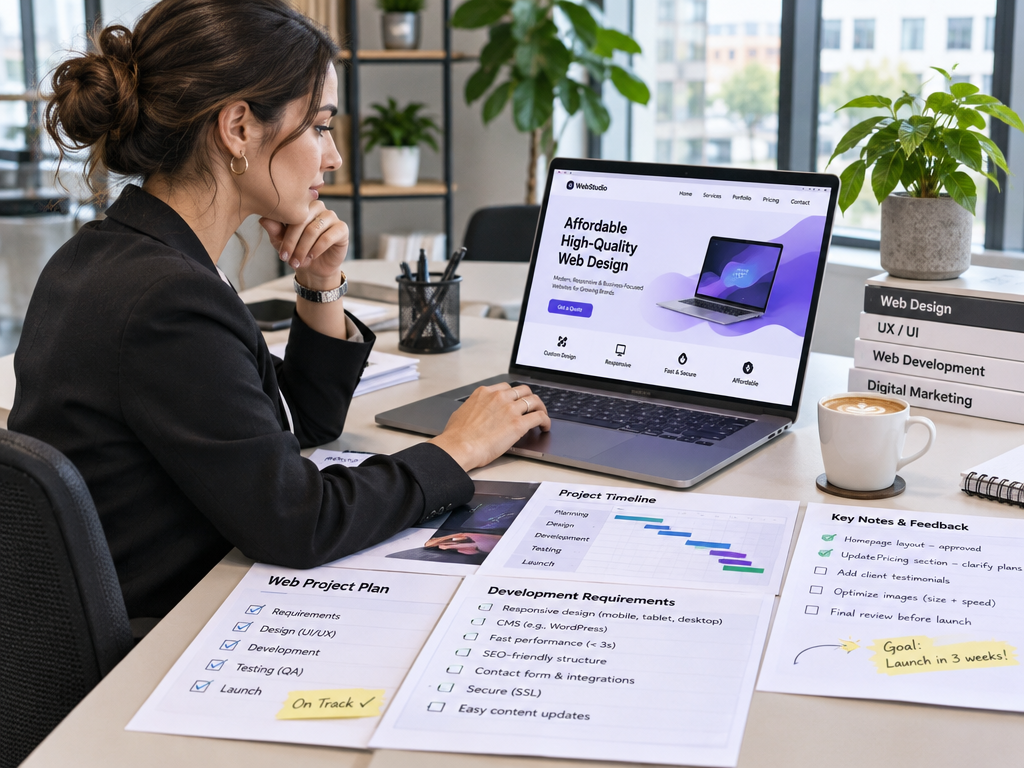
Having an online presence has become essential for freelancers, entrepreneurs, and small businesses. However, not everyone has a large budget to develop a website. That is why finding alternatives that make it possible to build an attractive, functional platform capable of reaching new customers is becoming increasingly important.
Low-cost web design without compromising quality proves that it is possible to have a professional website without making a significant investment. Choosing an affordable web design service allows businesses to make better use of their available resources, provided they select the right tools and prioritize the features they genuinely need.
The key is understanding what each project requires, which elements can be added later, and which should be prioritized from the beginning. A website does not need to be complex to convey professionalism and achieve its objectives.
What Should High-Quality, Low-Cost Web Design Offer?
A professional website needs to meet certain standards, regardless of the budget allocated to its development. The difference between a well-executed, affordable project and a poorly functioning one often lies in planning, selecting the right tools, and paying attention to detail.
Some of the most important aspects to prioritize include:
- Attractive and functional design: a polished appearance that inspires confidence and maintains a visual identity consistent with the business.
- Intuitive navigation: visitors should be able to find the information they need easily, without navigating complicated menus.
- Mobile responsiveness: the website should display correctly on smartphones, tablets, and computers.
- Loading speed: optimizing images and using an appropriate technical configuration helps improve the browsing experience.
- Basic SEO structure: content, headings, and technical elements should be organized to make them easier for search engines to understand.
These requirements provide a solid foundation for building a competitive website without spending money on features that may not be necessary.
How to Reduce Costs Without Sacrificing Quality
Developing an affordable website involves making smart decisions from the outset. It is not about removing important features, but rather avoiding investments that do not yet provide real benefits to the business.
Choose a Structure That Fits the Project
Not every business needs a platform with numerous sections. An independent professional, for example, can start with a homepage, a presentation of their services, a portfolio or gallery of previous work, and a contact section.
A simple, well-organized structure can be much more effective than a website overloaded with sections that provide little useful information.
It is also possible to use content management systems such as WordPress, which make it easier to create functional websites and expand their features as the business evolves.
Make the Most of Professional Templates and Tools
Pre-designed templates help reduce development time and, consequently, some of the associated costs. Today, there are flexible options that allow businesses to customize colors, typography, images, and layouts to create a distinctive visual identity.
It is advisable to choose reliable tools that offer customization options and receive regular updates. An inexpensive template can deliver professional results when properly adapted to the specific characteristics of each business.
The Importance of SEO for an Affordable Website
A visually appealing website needs more than an attractive appearance to gain visibility online. It must also help search engines understand its content so they can display it in response to searches related to the products or services it offers.
For this reason, search engine optimization should be considered from the earliest stages of development. High-quality, low-cost web design should also focus on technical structure and content organization.
Some essential elements to work on include:
- Keywords: identify the terms potential customers use when searching for information.
- Titles and meta descriptions: write clear descriptions that accurately reflect the content of each page.
- Heading hierarchy: organize information using H1, H2, and H3 headings.
- Internal links: make navigation between different sections easier.
- Optimized images: use suitable image formats and descriptive alternative text.
A well-planned initial configuration makes future SEO improvements easier and helps avoid unnecessary technical modifications.
Responsive Design and User Experience
Mobile phones have become one of the main tools people use to research businesses, compare services, and search for information. For this reason, adapting websites to different screen sizes is essential.
A responsive website reorganizes its elements according to the device being used. Text remains comfortable to read, images adjust to the available space, and buttons can be easily used on touchscreens.
User experience also depends on other details: consistent navigation, simple forms, clearly visible contact information, and content that directly answers visitors' questions.
Paying attention to these aspects helps even a small website convey professionalism and build trust from the very first visit.
What Services Should You Review Before Hiring a Web Designer?

Before accepting a quote, it is advisable to check which tasks are included and which could generate additional costs.
Some projects cover only design and publication, while others include additional services such as:
- Domain registration or configuration and web hosting.
- Content creation and organization.
- Basic search engine optimization.
- Integration of forms and social media.
- SSL security certificate.
- Maintenance and technical support.
It is also important to ask who will have access to the website, how modifications will be made, and whether new features can be added in the future.
Comparing quotes is not simply about choosing the lowest price. It is necessary to understand what each proposal includes, what support is provided, and what potential expenses may arise later.
An Affordable Website Can Also Grow With Your Business
Starting with a simple digital project allows businesses to spread their investment over time. There is no need to include every feature a company might require in the future from day one.
A business can begin with a corporate website and later add a blog, product catalog, booking system, or online store.
To support this evolution, it is advisable to use a flexible technical structure and tools that allow modifications without having to rebuild the entire platform. This way, the website can grow alongside the business and adapt to changing needs.
Invest Wisely to Achieve Better Results
Building a professional online presence does not necessarily require a large investment. What matters is defining clear objectives, selecting appropriate resources, and allocating the budget to elements that genuinely add value to the project.
High-quality, low-cost web design can provide a solid starting point for freelancers, entrepreneurs, and small businesses looking to increase their online visibility without putting unnecessary pressure on their finances. With proper planning, a functional structure, and a well-developed technical foundation, it is possible to build a website that delivers a positive user experience and supports long-term business growth.
Related content